Nation on the March

Nation on the March
Nation on the March

Oct 18, 2009

The God with two heads , the New Year , and my “daily dozen” resolutions:


Diwali - in my part of India – is the last day as per our local calendar called Vikram Samvat, immediately followed by New Year on the next day . And this ushers in the occasion for making resolutions!! So my time for the ritual has arrived on 19th October, about two months ahead of English calendar

Who started this all?

It is believed that the Babylonians were the first to make New Year's resolutions, and people all over the world have been breaking them ever since. As per http://www.goalsguy.com/Events/n_facts.html , the tradition of the New Year's Resolutions goes all the way back to 153 B.C. This was , however, not done on 1st January because, the New Year did not always begin on January 1, till 46 B.C.

In his book “Gods, Goddesses, and Mythology, Volume 6” C. Scott Littleton mentions that Janus was one of the earliest Italian gods. He was the guardian of all entrances, thresholds, beginnings and endings. The first hour of every day belonged to Janus, as did the first day of every month and the first month of every year.


With two faces, Janus could look back on past events and forward to the future. Janus became the ancient symbol for resolutions and many Romans looked for forgiveness from their enemies . Interestingly, Janus is still alive in modern English through the month of January and the caretaker of doors and halls, the janitor, both named after him.

So, since 2162 years people have been making new resolutions , and who am I to be different – because I too am mystified by Janus, the ever-watchful and vigilant Roman god ?

Now the ball is squarely in my court !!

Resolutions are a tricky subject, just like corporate mission statements and vision statements! You can go on writing and re-writing and yet, the eerie feeling hangs that you have not chosen your best words to bring out what resides in your heart!

Sean Covey mentions in his pocket book, Daily reflections of Highly Successful Teens about one shortest, meaningful mission statement from a teenager, Katie Halls viz." Nothing Less!"  Very well said, Katie.

Disheartened by Katie’s spectacular feat in brevity, I turn to the best-selling author John C Maxwell,
• who is a leadership expert, speaker & author, who is the author of more than thirty books, including the bestselling The 21 Irrefutable Laws of Leadership and has sold over 13 million books and whose organizations have trained 2 million leaders worldwide


Maxwell says: “Everyone has the power to impact the outcome of his life. The way to do it is to focus on today….Today is the only time you have. It's too late for yesterday. And you can't depend on tomorrow."
In this hands-on and inspiring guide TODAY MATTERS, he offers twelve daily practices to help you control your daily agenda, make time for people you love, and find success in your career. Maxwell offers 12 decisions and disciplines-he calls it his daily dozen -that can be learned and mastered by any person to achieve success


1. ATTITUDE: Choose and display the right attitude daily
2. PRIORITIES: Determine and act on important priorities.
3. HEALTH: Know and follow healthy guidelines daily.
4. FAMILY: Communicate with and care for the family daily
5. THINKING: Practice and develop good thinking daily.
6. COMMITMENT: Make and keep proper commitments daily.
7. FINANCES: Make and properly manage dollars daily
8. FAITH: Deepen and live out your faith daily
9. RELATIONSHIPS: Initiate and invest in solid relationships daily.
10. GENEROSITY: Plan for and model generosity daily.
11. VALUES: Embrace and practice good values daily.
12. GROWTH: Seek and experience improvements daily.

I wish to stop here, saying “Thanks, Mr. Maxwell” & also saying “Nothing More”.
Dear Lord Janus, please  wish me good luck for next 365 days. 
Amen !

New Year Resolutions

NEW YEAR RESOLUTIONS:


And, now some fun   :

Heaven knows we all could improve ourselves, but we're also fully aware that the chances of achieving success in keeping vows to ourselves are slim to none. Yet we make them. Let us see what happens to them, progressively .  Courtesy  http://www.tensionnot.com

RESOLUTION #1:
2002: I will read at least 20 good books a year.
2003: I will read at least 10 books a year.
2004: I will read 5 books a year.
2005: I will finish “The Pelican Brief”
2006: I will read some articles in the newspaper this year.
2007: I will read at least one article this year.
2008: I will try and finish the comics section this year.

RESOLUTION #2:
2002: I will get my weight down below 180.
2003: I will watch my calories until I get below 190.
2004: I will follow my new diet religiously until I get below 200.
2005: I will try to develop a realistic attitude about my weight.
2006: I will work out 5 days a week.
2007: I will work out 3 days a week.
2008: I will try to drive past a gym at least once a week.

RESOLUTION #3:
2005: I will go to church every Sunday.
2006: I will go to church as often as possible.
2007: I will set aside time each day for prayer and meditation.
2008: I will try to catch the late night sermon on TV.


Where has the leisure vanished ??


What is this life if, full of care,
We have no time to stand and stare.


Remember the school days when we studied this poem LEISURE By William Henry Davies. (1871-1940)? The poet  spent a significant part of his life as a tramp or vagabond in the US and the UK , but became known as one of the most popular poets of his time. He is generally best known for two lines from his poem, Leisure, first published in "Songs Of Joy and Others" in 1911. Its other beautiful lines are equally  true today , even after 100 years  :

No time to see, when woods we pass,   
Where squirrels hide their nuts in grass. 
No time to see, in broad daylight,  
Streams full of stars, like skies at night.  


I was reminded of this poem when  I visited  DEEP'S BLOG at http://dashingdeep.wordpress.com/2009/03/18/thinking-hard-an-e-mail-forward/  which has this modern-day wonderful , often -quoted poem , with a picture which speaks a thousand words:Publish Post


Please read on and see if it creates a feeling of deja vu, or going back to the memory lane !!. 


Thinking-Hard ( an-E-mail forward )


Here i am sitting in my office @ night…
Thinking hard about life


How it changed from a maverick collage life to strict professional life……
How tiny pocket money changed to huge monthly paychecks
but then why it gives less happiness….
How a few local denim jeans changed to new branded wardrobe
but then why there are less people to use them
How a single plate of samosa changed to a full Pizza or burger
But then why there is less hunger…..
Here i am sitting in my office @ night…
Thinking hard about life
How it changed…..


How a bike always in reserve changed to bike always on
but then why there are less places to go on……
How a small coffee shop changed to cafe coffee day
but then why its feels like shop is far away…..
How a limited prepaid card changed to postpaid package
but then why there are less calls & more messages……
Here i am sitting in my office @ night…
Thinking hard about life
How it changed……


How a general class journey changed to Flight journey
But then why there are less vacations for enjoyment….
How a old assembled desktop changed to new branded laptop
but then why there is less time to put it on……….
How a small bunch of friends changed to office mate
But then why we always feel lonely n miss those college frnz.….
Here i am sitting in my office @ night…
Thinking hard about life
How it changed…..

Oct 17, 2009

The Alchemist & Arabian Nights connection


The Arabian Nights & the Alchemist by Paulo Coelho have a connection!!

The former, as we know a literary epic which tells the story of Scheherazade, a Queen, who must relate a series of stories to her malevolent husband, the King, to delay her execution.

The stories are told over a period of one thousand and one nights, and every night she ends the story with a suspenseful situation, forcing the King to keep her alive for another day.

The individual stories were created over many centuries, by many people and in many styles, and they have become famous in their own right.

The latter, is inspired from one story: which is reproduced below. Also narrated is a small background of Paulo Coelho’s magnum opus “The Alchemist”. I enjoyed putting these bits together about the book and its author. Hope you will enjoy too!!

Here is both of them, but in reverse order:

Paulo Coelho (born August 24, 1947) is a Brazilian lyricist and novelist.


The Alchemist (Portuguese: O Alquimista) (was published in Portuguese in 1988 and in English 1993. It is a small book of s 167 pages. The Alchemist was originally written in Portuguese (1988) and has since been translated into English (1993) and 66 other languages, winning the Guinness World Record for most translated book by a living author. It has sold more than 65 million copies in more than 150 countries, becoming one of the best-selling books in history.

In his 30s, Paulo Coelho had already made a career as a popular songwriter. However, in 1986, Coelho walked the 500-plus mile Road of Santiago de Compostela in northeastern Spain, a turning point in his life. Coelho described this autobiographically in The Pilgrimage, and it also had great influence on his next book, The Alchemist (Santiago, the novel's main character, derives his name from the Road of Santiago).

In an interview, Coelho stated "The Alchemist is a metaphor of my own life. It was written in '88, and in that moment I was also very happy in the things I was doing. I was doing something that gave me food and water -- to use the metaphor in the book, I was working, I had a person who I loved, I had money, but I was not fulfilling my dream. My dream was, and still is, to be a writer."
Coelho sold the book to a small Brazilian publishing house, who made an initial print run of 900 copies and decided not to reprint. He subsequently found a bigger publishing house, and with the publication of his next book Brida, The Alchemist became a Brazilian bestseller.
In 1993, Harper Collins published 50,000 copies of the book, the largest American print run for a Brazilian author. An executive at Harper Collins described that "reading the Alchemist was like getting up at dawn and seeing the sun rise while the rest of the world still slept."
The underlying theme of one dream driving its dreamer passionately to pursue it has been deployed by many a writers in last few centuries.
One such directly connectable story from the Arabian Nights is reproduced below.
There is no comparison and every one is entitled to his own favourite flavour of his cup of tea.

The Arabian Nights (the book as well as extract of comments are from http://www.esp-world.info/Articles_18/Plan.htm by Michael Berman )


The Book of the Thousand Nights and a Night, translated by Richard F. Burton (London: The Burton Club, 1885). Since its first translation into a European language between 1704 and 1717, The Thousand and One Nights, also known as The Arabian Nights, has been recognized as a universal classic of fantasy narrative.
It is, in fact, a much older work. Based on Indian, Persian, and Arab folklore, it dates back at least 1000 years as a unified collection, with many of its individual stories undoubtedly being even older.
If this particular story seems familiar to you, it might be because it provided the basis for the modern classic - Paolo Coelho’s The Alchemist:
THE MAN WHO BECAME RICH THROUGH A DREAM

THE STORY
Once there lived in Baghdad a wealthy businessman who lost all his means and was then forced to earn his living by hard labour. One night a man came to him in a dream, saying, "Your fortune is in Cairo; go there and seek it." So he set out for Cairo. He arrived there after dark and took shelter for the night in a mosque. As Allah would have it, a band of thieves entered the mosque in order to break into an adjoining house. The noise awakened the owners, who called for help. The Chief of Police and his men came to their aid. The robbers escaped, but when the police entered the mosque they found the man from Baghdad asleep there. They laid hold of him and beat him with palm rods until he was nearly dead, then threw him into jail.
Three days later the Chief of Police sent for him and asked, "Where do you come from?"
"From Baghdad," he answered.
"And what brought you to Cairo?"
"A man came to me in a dream and told me to come to Cairo to find my fortune," answered the man from Baghdad "But when I came here, the promised fortune proved to be the palm rods you so generously gave to me."
"You fool," said the Chief of Police, laughing until his wisdom teeth showed. "A man has come to me three times in a dream and has described a house in Baghdad where a great sum of money is supposedly buried beneath a fountain in the garden. He told me to go there and take it, but I stayed here. You, however, have foolishly journeyed from place to place, putting all your faith in a dream which was nothing more than a meaningless hallucination." He then gave him some money saying, "This will help you return to your own country."
The man took the money. He realized that the Chief of Police had just described his own house in Baghdad, so he returned home immediately, where he discovered a great treasure beneath the fountain in his garden. And this is how Allah brought the dream's prediction to fulfillment.

Oct 16, 2009

Diwali - the reminder of victory of good over the evil within an individual.


Greetings and Best Wishes
for Diwali ( or Dīpāvali),
the Indian festival , scheduled on 17th Oct.2009
of lights, fire crackers, sweets and gaiety !!

Diwali or Dīpāvali is a significant festival and almost everywhere, people celebrate Diwali as the Festival of Lights. They light diyas—cotton string wicks inserted in small clay pots filled with oil—to signify victory of good over the evil within an individual.


Kavi Shri Niranjan Narharibhai Bhagat,

• (b. 18-5-1926, Ahmedabad )

This Diwali time, I chose a lovely poem by Shri Niranjan Bhagat , titled " Let us shake hands". It was a sheer joy to write it 20-30 times on the back of a post card - a joy which is different than the convenience of "cut & paste" of modern word processing ! The joy was so enhanced when a friend from Surat rang up to convey how much he liked it. Post card costs just 50 paise ( or one US cent) and in less than 24 hours, our grand old postal system had delivered it his town 75 kms away!! Thanks dear Post Office team!!

I am tempted to share it here, but not in my hand writing. Instead, I have scribbled another of his poem " I have come here only to wander" , on a back of another post card, waiting to travel to another town .

It is worth trying your hand at the post card, of course if you have time, inclination ( and the postal address of your friend !!)


( Addl information as an extract : courtesy http://gujaratonline.com/arts/nbhagat.htm)

'Chhandolaya' (1943) and 'Kinnari' (1959) brought to us poems Niranjan Bhagat had written since 1943. These collections created a new note; a beginning of what is called in historical terms, ‘Rajendra-Niranjan Yug.' The Age of Rajendra-Niranjan was the one following that of Sundaram and Umashankar. With this, Niranjan Bhagat established himself as a major poet of the language.

Niranjan Bhagat has always been an urban poet, unlike his predecessors Umashankar, Sundaram and Rajendra who moved to the cities after a rural life. Niranjan was born in the textile city-Ahmedabad. Save a few years in Mumbai, Niranjan Bhagat's childhood, adolescence and youth were all spent in Ahmedabad.

Niranjan Bhagat was born in businessman's family and originally his last name was 'Gandhi’. His grandfather was an active member of a 'bhajan-mandali' and hence came to be known as Bhagat.

Niranjan’s uncle Ram Bhagat was an exemplary student of English Literature and studied Law in London for a few years. The uncle had an untimely death. However, among the things he left behind-books etc.-was a map of London. This injected a desire in the young Niranjan to travel in the city of London. The desire found fulfillment to the extent that since 1982 Niranjan Bhagat has been visiting London every year.

The most tragic event of Niranjan's family and his personal life took place when his father renounced home in 1936. Niranjan was ten years old then. There has been no news from his father since then. Niranjan’s poetry reflects a quest for childhood as well as for the father.

Rabindranath Tagore died in 1941.The experience of reading 'Gitanjali' was a profound one for Niranjan Bhagat. He wrote about 100 poems in English in the style of 'Gitanjali'. He taught himself Bengali to read Rabindranath in the original. He even tried his hand at writing in Bengali.

Niranjan Bhagat studied English Literature in Elphinstone College, Mumbai. Living in Mumbai brought a profound, yet tangible difference to Niranjan's poetic consciousness. The poet completed his M.A. in 1950 and joined L.D. Arts College as a lecturer. After teaching in various colleges, Niranjan Bhagat retired from St. Xavier's College in 1986.

It is hardly a matter of surprise that Niranjan Bhagat came under the influence of western modernism with his wide range of exposure and experience as a teacher of English Literature. His poetic consciousness has been constituted by poets like Baudelaire, Pound, Eliot, Auden and Rilke. Niranjan Bhagat's poetry indicates the first contact Gujarati poetry made with modernism.


In addition to creative writing, criticism and editing, Niranjan has established a significant place for himself even in the field of translation. He has translated many Bengali poems of Rabindranath Tagore into Gujarati. He has also rendered Tagore's verse-play 'Chitrangada' into Payar chhand. His translation of 'Svapnavasavasavadattam' (The Vision of Vasavadatta, Penguin,1972) was enacted in the United States.

Niranjan Bhagat was awarded the 'Kumar Chandrak' in 1949 for the best contribution to the monthly 'Kumar' during the year. In 1957, his collection 'Chhandolay‘ was adjudged as the best collection of poems during the previous five pears and he was awarded the 'Narmad Suvarna Chandrak'. In 1969, he received the 'Ranjitram Suvarna Chandrak' for his outstanding contribution to Gujarati literature.

At-present, translating Baudelaire's Les Fleurs du Mal'and 'Petits poems en prose' from French into Gujarati

Oct 15, 2009

Interested in finding newer , great websites? - Then, your search is over!
What great website is http://www.stumbleupon.com !!


StumbleUpon helps you discover and share great websites.Rather than searching for quality web sites, StumbleUpon members are taken directly to web sites matching their personal interests and preferences..


My joy is great. I wish all who like net surfing can enhance their pleasure through this website !


Happy surfing !


Discover the best of the web in less time.

What interests you?


one sample


Where Land Meets Sea: 49 Hawaiian Lava Flow Photos

In Science on August 7, 2009 at 8:10 pm
Lava
At Hawaii Volcanoes National Park you can view red hot lava up-close and personal. In the east rift zone of Kilauea alone lava flows at an average rate of 800-1,300 gallons per second and this has added over 500 acres of new land to the island since it first erupted in 1983.

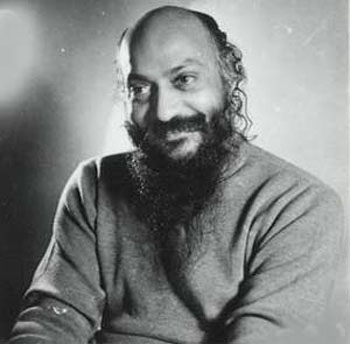
Osho narrates a beautiful story from Upanishads


Osho narrated a beautiful story from Upanishad days about seeking supreme knowledge

(http://www.energyenhancement.org/vedanta/Osho-Vedanta-Seven-steps-to-Samadhi-Chapter-4-The-Supreme-Knowl edge.html)

It runs like this: The supreme knowledge cannot be taught. The disciple cannot know that there is something which cannot be taught. It happened in Upanishadic days that one young boy, Svetaketu, was sent by his father to a gurukul, to a family of an enlightened master, to learn. He learned everything that could be learned, he memorized all the Vedas and all the science available in those days. He became proficient in them, he became a great scholar; his fame started spreading all over the country. Then there was nothing else to be taught, so the master said, "You have known all that can be taught. Now you can go back."

Thinking that everything had happened and there was nothing else -- because whatsoever the master knew, he also knew, and the master had taught him everything --
Svetaketu went back. Of course with great pride and ego, he came back to his father.

When he was entering the village his father,
Uddalak, looked out of the window at his son coming back from the university. He saw the way he was walking -- very proudly, the way he was holding his head -- in a very egoistic way, the way he was looking all around -- very self-conscious that he knew. The father became sad and depressed, because this is not the way of one who really knows, this is not the way of one who has come to know the supreme knowledge.

The son entered the house. He was thinking that his father would be very happy -- he had become one of the
supreme most scholars of the country; he was known everywhere, respected everywhere -- but he saw that the father was sad, so he asked, "Why are you sad?"

The father said,
"Only one question I have to ask you. Have you learned that by learning which there is no need to learn anything any more? Have you known that by knowing which all suffering ceases? Have you been taught that which cannot be taught?"

The boy also became sad. He said, "No. Whatsoever I know has been taught to me, and I can teach it to anybody who is ready to learn."

The father said, "Then you go back and ask your master that you be taught that which cannot be taught."

The boy said, "But that is absurd. If it cannot be taught, how can the master teach me?"

The father said,
"That is the art of the master: he can teach you that which cannot be taught. You go back."

He went back. Bowing down to his master's feet, he said, "My father has sent me for an absolutely absurd thing. Now I don't know where I am and what I am asking you. My father has told me to come back and return only when I have learned that which cannot be learned, when I have been taught that which cannot be taught. What is it? What is this? You never told me about it."

The master said,
"Unless one inquires, it cannot be told; you never inquired about it. But now you are starting a totally different journey. And remember, it cannot be taught, so it is very delicate; only indirectly will I help you. Do one thing: take all the animals of my gurukul -- there were at least four hundred cows, bulls and other animals -- and go to the deepest forest possible where nobody ever comes and moves. Live with these animals in silence. Don't talk, because these animals cannot understand any language. So remain silent, and when just by reproduction these four hundred animals have become one thousand, then come back."

It was going to be a long time -- until four hundred animals had become one thousand. And he was to go without saying anything, without arguing, without asking, "What are you telling me to do? Where will it lead?" He was to just live with animals and trees and rocks; not talking, and forgetting the human world completely. Because your mind is a human creation, if you live with human beings the mind is continuously fed. They say something, you say something -- the mind goes on learning, it goes on revolving.

"So go," the master said, "to the hills, to the forest. Live alone. Don't talk. And there is no use in thinking, because these animals won't understand even your thinking.
Drop all your scholarship here."

Svetaketu followed. He went to the forest and lived with the animals for many years. For a few days thoughts remained there in the mind -- the same thoughts repeating themselves again and again. Then it became boring. If new thoughts are not felt, then you will become aware that the mind is just repetitive, just a mechanical repetition; it goes on in a rut. And there was no way to get new knowledge. With new knowledge the mind is always happy, because there is something again to grind, something again to work out; the mechanism goes on moving.

Svetaketu became aware. There were four hundred animals, birds, other wild animals, trees, rocks, rivers and streams, but no man and no possibility of any human communication. There was no use in being very egoistic, because these animals didn't know what type of great scholar this Svetaketu was. They didn't consider him at all; they didn't look at him with respect, so by and by the pride disappeared, because it was futile and it even looked foolish to walk in a prideful way with the animals. Even Svetaketu started feeling, "If I remain egoistic these animals will laugh at me -- so what am I doing?" Sitting under the trees, sleeping near the streams, by and by his mind became silent.

The story is beautiful. The years passed and his mind became so silent that
Svetaketu completely forgot when he had to return. He became so silent that even this idea was not there. The past dropped completely, and with the dropping of the past the future drops, because the future is nothing but a projection of the past -- just the past reaching into the future. So he forgot what the master had said, he forgot when he had to return. There was no when and where, he was just here and now. He lived in the moment just like the animals, he became a cow.

The story says that when the animals became one thousand, they started feeling uncomfortable. They were waiting for
Svetaketu to take them back to the ashram and he had forgotten, so one day the cows decided to speak to Svetaketu and they said, "Now it is time enough, and we remember that the master had said that you must come back when the animals became one thousand, and you have completely forgotten. Now is the time and we must go back. We have become one thousand."

So
Svetaketu went back with the animals. The master looked from the door of his hut at Svetaketu coming with one thousand animals, and he said to his other disciples, "Look, one thousand and one animals are coming." Svetaketu had become such a silent being -- no ego, no self-consciousness, just moving with the animals as one of them.

The master came to receive him; the master was dancing, ecstatic. He embraced
Svetaketu and he said, "Now there is nothing to say to you -- you have already known. Why have you come? There is no need to come now, there is nothing to be taught. You have already known."

Svetaketu said, "Just to pay my respects, just to touch your feet, just to be grateful. It has happened, and you have taught me that which cannot be taught."

This is what a master is to do: create a situation in which the thing happens. So only indirect effort can be made, indirect help, indirect guidance. And wherever direct guidance is given, wherever your mind is taught, it is not religion. It may be theology but not religion; it may be philosophy but not religion


Acknowledgement: Some interesting pictures of Osho in his younger days !


Oct 12, 2009

Of Holy Cows and the rest of the cattle


Shashi Tharoor was born abroad, has studied abroad and worked abroad. Ishaan and Kanishk are twin sons of Shashi. Ishaan lives in Hong Kong and works for “Time” magazine. Kanishk lives in London and works for “Open Democracy”. Obviously the upbringing has been top class, the lifestyle upbeat and there is no surprise that the preference is for 5-star hotels.


But it has not always been so for the Tharoor clan, in Shashi Tharoor’s own words ( ref : his column in The Hindu on Sunday, Sep 26, 2004, titled “Standing Tall” http://www.thehindu.com/thehindu/mag/ 2004/09/26/stories/ 2004092600270300.htm )

He wrote this nostalgic obituary to mourn the demise of his father’s eldest brother Tharoor Parameshwar, who had just passed away.


Let us read his own words:


“MY sisters and I knew him as "Valiachan", which in Malayalam is literally "Big Father", for he was our father's elder "brother", indeed the eldest. …… For he was one of those people who was not merely a self-made man, but one who had made others; …….. Valiachan was born, in February 1918, into a good family that had fallen upon hard times. Historians tell us that at the time of Vasco da Gama, the entire area around Palghat was known as "Tharoor Swarupam", but the Tharoors had, over the centuries, been reduced to farming at levels little above subsistence. The usual Kerala solution had to be found to the problem: emigration.


So young Param, a brilliant student, dropped out of school after standard 10, learned typing and moved to Bombay, aged 18, to look for a job. His father had been ailing for years and soon passed away, leaving the financial responsibility for his mother, four brothers and three sisters upon the teenager. Valiachan found a place in the Ramakrishna Mission at the Bombay suburb of Khar where, in return for cleaning the premises, he was allowed to sleep on the floor and given one free meal a day. Each day he walked 20 kilometres to work in the Fort area and back, because he could not afford the bus fare. But he sent money home. Before he became an adult, Valiachan had become the saviour of his family.


…………. After a few temporary jobs he was hired by the largest advertising agency in British India, J. Walter Thomson, as a stenographer. His intelligence, integrity and drive soon shone through: within a couple of years he was the Media Manager. ……………..(Later) he decided to set up shop on his own in London. In those days most major Indian businesses were headquartered in London while the consumers were in India, so for five years he ran a successful operation from Fleet Street ……..


While doing this he not only supported his family in Kerala but brought his three youngest brothers to London to study and start their working lives. It was no accident that two of them followed Valiachan into advertising: one was my own father, Chandran Tharoor.

London lost its attractions after independence, so three years (were spent) in Calcutta ….. In 1955 Valiachan returned to Bombay in triumph, as the founder publisher of the Indian edition of the Reader's Digest.


The boy who could not afford to complete his schooling, who walked 20 km to work each day, ended a long and distinguished life as the patriarch of a highly successful and prosperous family, and the revered patron of an entire profession.”

It is not difficult to imagine that what would have been the plight of seven siblings and the mother if the eldest one had not created great opportunities for himself as well as three brothers, (Shashi Tharoor’s father included).


Imagine that just 20 years before Shashi’s birth, the plight of Tharoor family- as described by him - was similar to several lower middle class families in India who make a daily struggle for managing two square meals a day and a shelter. Every one knows that two years ago, a plate of idlis cost ‘merely’ Rs.395 + taxes at the renowned 5-star hotel Taj Man Singh hotel, which he found to be nearest to his affluent life style.


Out of this self-professed extravagance under the pretext of ‘proper residential accommodation” was born the infamous “cattle class” controversy which robbed Shashi of his stiff ‘moral’ upper lip and he was saved from being the first sacrifice at the altar of austerity in almost first 100 days of his rise to the national fame.


Winning a battle

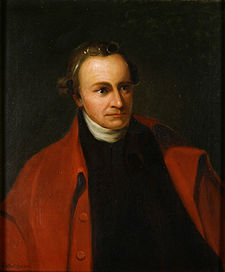
We are not weak if we make a proper use of those means which the God of Nature has placed in our power... the battle, sir, is not to the strong alone it is to the vigilant, the active, the brave. . -


Patrick Henry (May 29, 1736June 6, 1799)


He served as the first post-colonial Governor of Virginia from 1776 to 1779. A prominent figure in the American Revolution, Henry is known and remembered for his "Give me Liberty, or give me Death!" speech, and as one of the Founding Fathers of the United States. He is remembered as one of the most influential (and radical) advocates of the American Revolution andrepublicanism, especially in his denunciations of corruption in government officials and his defense of historic rights